
Responsive teaching is more than a technique — it’s a habit of mind. At its core, it’s about noticing what students are showing you in real time and being willing to adapt on the spot. It’s a little more deliberate than that though. It’s actually about planning for that noticing to happen. It’s actually a microcosm of an action research cycle. AITSL (2020) calls it an Inquiry Cycle and it’s part of the job — and an exceedingly satisfying one in my view. All teachers have at least one formative assessment, usually in the form of a draft in their planning, with various mentions in their unit plans of exit passes or other classroom activities as formative assessment opportunities. In my work with teachers, I have come to understand that it’s not always clear how we use the data collected, nor the importance of responding to it with adjustments to the teaching plan.
One way to improve both learning and data about that learning is through increased participation, and research indicates that cold calling does increase engagement, if done ‘with intention and care’ (Teach like a Champion, 2025). It’s fast, effective and, as long as everyone is joining in, gives you nice data coverage across the class, but not only that, “participation is essential for learning” (Ryrie Jones, 2025). Purposeful planning is important, but the method — once questioning is mastered — can be quite simple: watch for signals and ask the right questions (check for understanding).
Responsive teaching is cyclical, iterative and focused on assessing various small and specific learning outcomes, which, when they come together, contribute to a successful product at assessment time. This means planning ahead and anticipating where the sticky spots might be and having your questions ready. At first, this will be quite deliberate, but after a while, it will be natural. Readers may already be doing this with ease. Responsive teachers use such techniques to gather evidence of understanding during the lesson itself and make immediate adjustments — teach-track-respond (Ryrie Jones, 2024). There’s a lot happening in a classroom, and it might not feel possible to immediately respond to a gap when we see an issue, but if we don’t, we are wasting instructional time anyway, so we might as well pause, reset and correct before moving on.
Some say students find cold-calling intimidating and it can be psychologically damaging, but, as literacy expert, Pamela Snow (2025), explains in this blog post, when ‘teachers socialise student into the process’, this risk is significantly reduced. Personally, I still think there are exceptions, and some students need either permanent or temporary ‘pass’ options, but if we can build classrooms where participation feels safe, reasoning is valued, and mistakes are reframed as learning opportunities, we can do most of the work in including most students. For the others, we design other ways for them to participate: online collaboration tools etcetera.
In the overview to follow, I draw on a discussion between Tom Sherrington and Bron Ryrie Jones as two great pedagogical minds discuss the benefits and barriers in this Mind the Gap podcast episode.

I also draw on my own practice in classes with cultural and neurodiversity, and I’ve also made a few suggestions for when things like this don’t seem like they will work for everyone. Truth is, they won’t — not without adjustments and alignments to who you have in your room.
For example, responsive teaching also needs to be understood in relation to diverse cultural contexts. For example, planning that provides opportunity for frequent collection of independently developed work samples can also provide monitoring opportunities that inform next-step teaching and allow the provision of ‘feedforward’ to students (Sadler et al., 2023). Using methods such as those described by Hochman & Wexler (2017) in their book The Writing Revolution, whereby short writing exercises are used to check for understanding across all disciplines, I had success mapping progress and responding to individualised literacy problems in a remote Indigenous community context. If you’re not familiar with The Writing Revolution, check them out here; you won’t regret it.
Back to the data… this ‘data’ can be ‘collected’ with whiteboards if that feels lower stress but take photos, or a note book if you have built up a culture where students are happy to commit to paper. Hint: let them use a pencil if that feels less stressful.
In practice, building this sort of culture often means making adjustments through a strengths-based lens (Sarra, 2005), in the context mentioned, it meant recognising and valuing Indigenous learning practices and the social understandings around speaking up and questioning (Maher, 2022). In that context, I adapted explicit instruction resources from The Grammar Project (Syntax Project, 2022) in line with D’Aietti et al.’s (2020) finding that EI processes ‘must be re-aligned, re-adjusted and re-positioned’ for Torres Strait Islander needs (p. 312). Not only was it important to build trust for them to feel comfortable enough to fail without shame, but the content had to make sense for their lives — that’s just respect.
In this case, learning was ‘contextualised’ by drawing on local resources and reaffirming community values rather than negating them (D’Aietti et al., 2020, p. 316). Unfamiliar content (such as homework or having your own room) was replaced with concepts more familiar to learners, reducing cognitive load and confusion (Guenther et al., 2015; Meakins, 2014). Similarly, adjustments to process included replacing ‘cold calling’ and non-volunteer questioning with whiteboard and pair work, reducing the ‘shame’ associated with public responses (Guenther et al., 2015). We also did a lot of relay writing (e.g., providing an overview of learning in teams like a relay), as team failure and success seemed to hold far less social risk than individual focus.
Responsive Teaching: Teach-Track-Respond
Responsive teaching (RT) is about adapting in the moment, based on what students show in their responses and understanding. It requires teachers to gather evidence of learning during lessons and make immediate adjustments, rather than waiting until later assessments.
Key Ideas
- RT is Teaching that adapts in the moment, based on what students are showing in their responses and understanding.
- Involves frequent checks for understanding, eliciting evidence of learning, and making immediate adjustments.
- Importantly, these are planned for: Likely misunderstandings/difficult concepts are identified and formative assessments planned around those flashpoints.
Why It Matters
- Being responsive improves equity: more students get a chance to show understanding or confusion, so teachers can support those who need help sooner.
- It reduces the gap between what teachers intend to teach and what students actually learn, by making instruction more adaptive. (Dylan Wiliam, expert on formative assessment, says teaching is like flying a plane)
- By adjusting instruction sooner, teachers save time and increase the effectiveness of their teaching.
Barriers & Habits That Make It Hard
- Existing teaching routines and habits are hard to shift — old patterns of “teach then test later” are deeply embedded.
- It can be difficult to get authentic participation from all students; often only a few take part or volunteer, meaning all the data comes from those few participants.
- Question framing, teacher expectations, and classroom culture (e.g. students feeling like they need to be “right” all the time) can reduce responsiveness.
- Classroom culture and intimidating question framing can make students reluctant to share, especially if they fear being wrong.
Strategies & Practical in brief: What does it look like?
- Cold calling: calling on students rather than waiting for volunteers, to ensure participation is more evenly distributed.
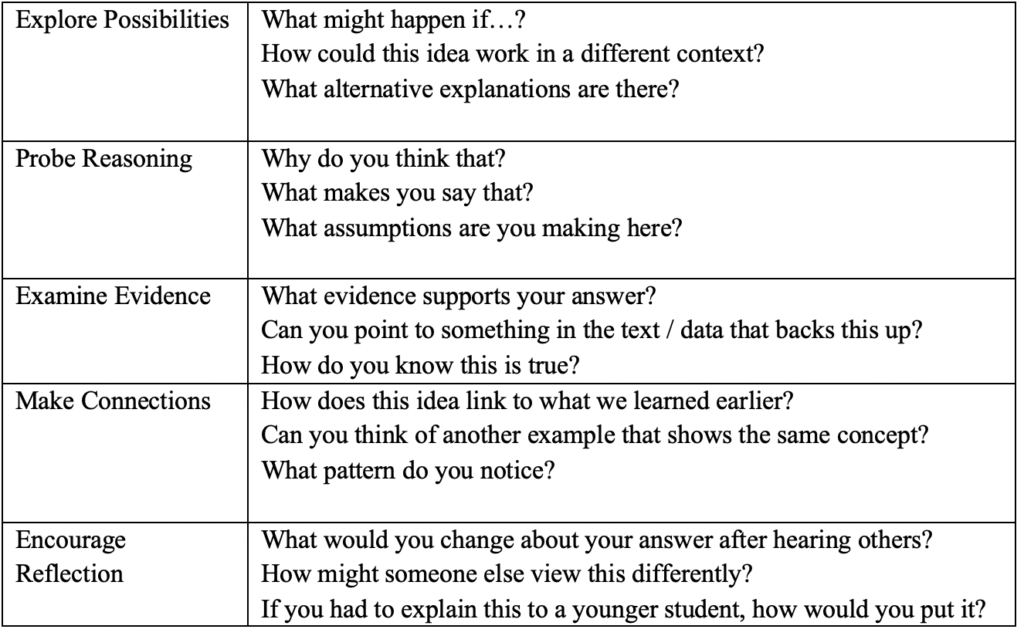
- Reframing questions: how questions are posed matters — framing can encourage deeper thinking and more willingness to respond. Ask in ways that prompt reasoning (e.g., “What makes you say that?”).
- A culture that honours the learning power of mistakes: making “being wrong” less risky so that students feel more willing to try, test ideas, and learn. Normalise and reframe mistakes (growth mindset thinking)
- Short feedback loops: not waiting long periods before collecting evidence of understanding; using small checks during lessons so adjustments can be made quickly.
- Planned checks for understanding: deliberately building into lesson planning moments to gauge student learning, not just after the fact.
Actionable Steps for RT in more detail
- Plan for Responsiveness
- Embed planned checkpoints into your lessons (e.g. pause after a key explanation and ask a targeted question to check understanding).
- Decide in advance where you might adapt the lesson if evidence shows students are struggling.
- Use Inclusive Questioning
- Use cold calling: select students to answer rather than only taking volunteers, to engage the whole class.
- Reframe questions to invite reflection and the sense that there is no one desirable answer (*See table at the conclusion of this document for suggested questions stems if you need them.)
- If an answer is not correct, pick something in the answer that is relevant or praise the thinking “I really like your thinking there…’ and then invite other students to add to the answer.
- Provide students with anxiety a chance to prep for questions in advance. (This means planning some formative questions — not all).
- Normalise Mistakes
- Build a classroom culture where wrong answers are valued as learning opportunities.
- Acknowledge the attempt, probe reasoning, and use errors to highlight key concepts.
- Shorten Feedback Loops: Don’t forget the respond part!
- Don’t wait until end-of-unit assessments; gather real-time evidence with mini whiteboards, quick quizzes, or hands-up checks.
- Adjust explanations or reteach immediately when confusion is spotted.
- Strengthen Participation Structures
- Use think–pair–share or small-group talk before whole-class responses so more students can rehearse their thinking. (Helps with anxiety)
- Rotate who contributes to ensure all voices are heard.
- Develop Teacher Habits
- Practise scanning the room and noticing subtle cues (facial expressions, hesitation, silence).
- Reflect after lessons: “Where did I miss chances to respond?” and refine routines.
- Reduce Barriers to Engagement
- Make the classroom a low-risk space by reinforcing that participation matters more than perfection.
- Avoid only praising correct answers; instead, praise reasoning and effort.
Critical-Thinking Question Stems for Responsive Teaching
References
D’Aietti, K., Lewthwaite, B., & Chigeza, P. (2020). Negotiating the pedagogical requirements of both explicit instruction and culturally responsive pedagogy in Far North Queensland: Teaching explicitly, responding responsively. The Australian Journal of Indigenous Education, 50(2), 312–319. https://doi.org/10.1017/jie.2020.5
Guenther, J., Disbray, S., & Osborne, S. (2015). Building on ‘Red Dirt’ Perspectives: What Counts as Important for Remote Education? The Australian Journal of Indigenous Education, 44(2), 194–206. https://doi.org/10.1017/jie.2015.20
Maher, K. (2022). The Aboriginal and Torres Strait Islander histories and cultures cross curriculum priority: Pedagogical questions of country, colonialism and whose knowledge counts. 40(2). https://search.informit.org/doi/abs/10.3316/informit.713320371113988
D’Aietti, K., Lewthwaite, B., & Chigeza, P. (2020). Negotiating the pedagogical requirements of both explicit instruction and culturally responsive pedagogy in Far North Queensland: Teaching explicitly, responding responsively. The Australian Journal of Indigenous Education, 50(2), 312–319. https://doi.org/10.1017/jie.2020.5
Sarra, C., Spillman, D., Jackson, C., Davis, J., & Bray, J. (2020). High-Expectations Relationships: A Foundation for Enacting High Expectations in all Australian Schools. The Australian Journal of Indigenous Education, 49(1), 32–45. https://doi.org/10.1017/jie.2018.10
Sherrington, T. (Host), & Ryrie Jones, B. (Guest). (2024, August 23). Bonus: Responsive teaching with Bron Ryrie Jones [Audio podcast episode]. In Mind the gap. YouTube. https://youtu.be/DFHXBUXd3qc